
Practice-Oriented Conference in Pretoria
The Future of African–European Relations
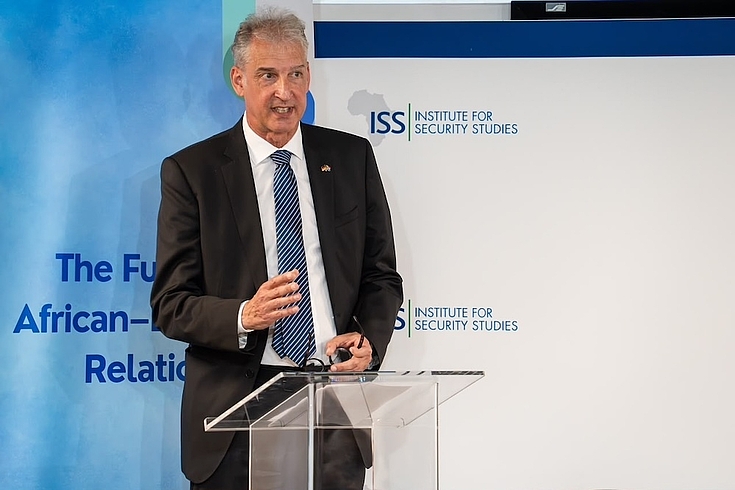
Oliver Rentschler, German Ambassador Designate in South Africa, during his opening remarks
HSF
How can both regions strengthen their strategic partnership and translate shared interests into concrete, commercially viable projects that deliver tangible benefits for both sides?
This question was at the heart of our international conference “The Future of African–European Relations – From Intent to Practice”, held on 12 October at the Institute for Security Studies in Pretoria, which included a large online audience as well.
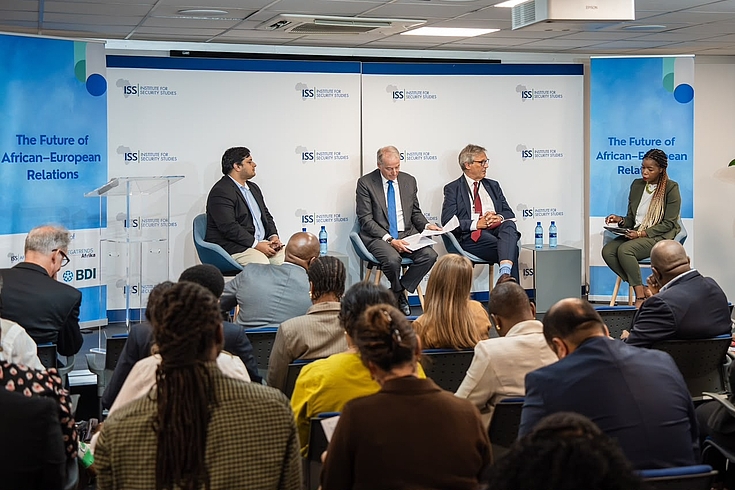
Opening Conversation with Ashor Sarupen, SA Deputy Minister of Finance, H.E. Kristian Schmidt, EU Ambassador to South Africa, Dr Stefan Mair, Director of the German Institute for International and Security Affairs and Executive Chairman of the Stiftung Wissenschaft und Politik (SWP), and Ottilia Maunganidze, Head of Special Projects, Institute for Security Studies
HSF
Together with South Africa’s Minister of International Relations and Cooperation Ronald Lamola, Deputy Minister of Finance Ashor Sarupen, German Ambassador Oliver Rentschler and EU Ambassador Kristian Schmidt, Dr Stefan Mair, Director of the German Institute for International and Security Affairs and Executive Chairman of the Stiftung Wissenschaft und Politik (SWP), as well as senior representatives from government, business, academia and diplomacy, we discussed the future of African–European relations at the Institute for Security Studies.
The full-day event drew a large audience in Pretoria, and many participants joined online as well.
Find the full Agenda here:
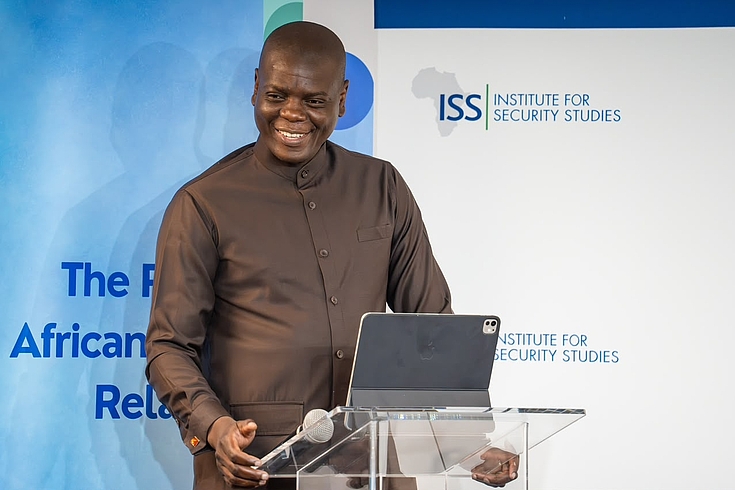
Ronald Lamola. Minister of International Relations and Cooperation, South Africa, giving the Keynote Address
HSF
In his address, Minister Ronald Lamola highlighted the opportunities offered by a stronger partnership with Europe:
“As a partner, Europe has much on offer: balanced trade, predictability, respect for rules and sovereignty, and a commitment to multilateralism.
The Global Gateway initiative offers a practical opportunity to support these ambitions, particularly through investment in transport corridors, modern ports and the infrastructure needed to connect African markets.”
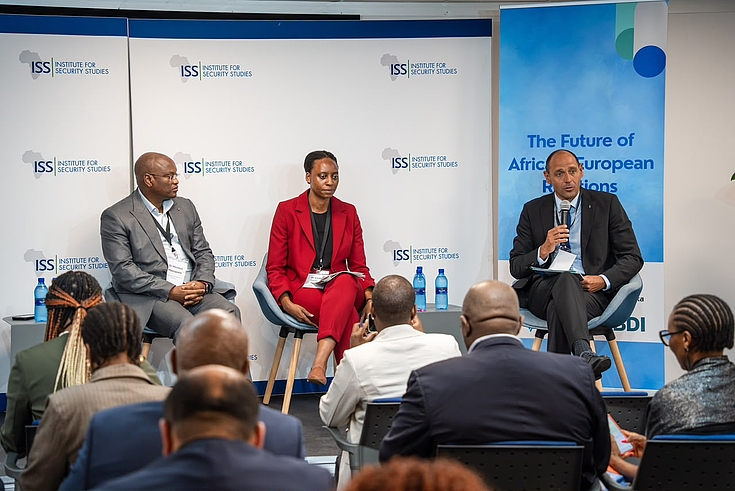
Panelists Dr Michael Masiapato, Commissioner & Chief Executive Officer, SA Border Management Authority, Linda Lochner. Researcher, Kiel Institute for the World Economy and Megatrends Afrika, and Moderator Hanns Bühler, Resident Representative, Hanns Seidel Foundation South Africa, during their panel on “Migration and the politics of partnership: how to balance border security with legal mobility”
HSF
The conference marked the conclusion of a joint research and dialogue initiative launched in April 2026 by the Hanns Seidel Foundation, the Institute for Security Studies, the Federation of German Industries BDI - Bundesverband der Deutschen Industrie e.V. and the Megatrends Afrika research consortium (Stiftung Wissenschaft und Politik (SWP), German Institute of Development and Sustainability (IDOS) & the Kiel Institute for the World Economy).
The initiative produced eight research papers with concrete policy recommendations, which provided the foundation for our discussions.
You can read the series of research articles here:
Three key areas were at the centre of the conference:
- Economic Cooperation and Critical Minerals: Strengthening investment, industrialisation and local value creation while translating complementary economic interests into commercially viable projects.
- Migration and Mobility: Reconciling the economic opportunities of legal labour mobility with the requirements of effective border management and security.
- Geopolitical Stability and Strategic Partnerships: Identifying shared interests, strengthening security and stability, and making cooperation more effective in an increasingly fragmented global order.
The future of African–European relations will depend less on further declarations of intent than on the ability to translate shared strategic interests into concrete, commercially viable and sustainable cooperation that delivers lasting results.
A successful partnership does not require both sides to agree on every issue. What matters is transparency about respective interests, a willingness to engage in constructive dialogue, and the ability to turn shared priorities into concrete, measurable outcomes.
This is precisely where our joint cooperation initiative between German and African organisations seeks to make a difference: bringing together policymakers, businesses, researchers and international partners to identify shared interests and contribute to the development of concrete, effective partnerships.
Watch a short video clip of the day here:
A full recording of the conference will be available here soon!
Subscribe to our Newsletter to receive event invitations and new publications via email - and follow us on Facebook, Twitter and LinkedIn for news about our work.